
Table of Contents
Shaping the Future of Tourism on Banks Peninsula: Destination Management Plan Update 2026
How can Banks Peninsula welcome visitors while protecting the character, environment and wellbeing of its communities? This is the central question guiding Te Pātaka o Rākaihautū Banks Peninsula Destination Management Plan, which is now moving through its implementation phase.
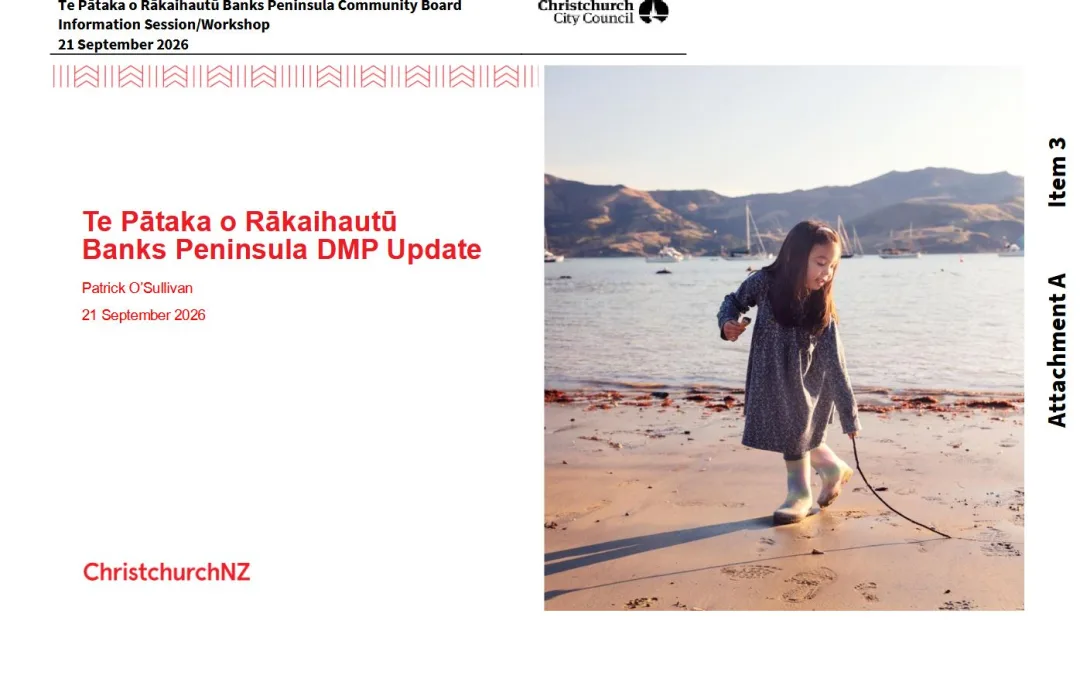
At an information session held on 21 September 2026, Patrick O’Sullivan, Destination and Experience Manager at ChristchurchNZ, updated the Te Pātaka o Rākaihautū Banks Peninsula Community Board on progress with the plan and highlighted some of the key work undertaken during 2025/26.
A plan shaped by community voices
The Destination Management Plan (DMP) was developed following extensive community consultation between late 2022 and late 2023. The plan was endorsed by the Community Board in November 2023, with ChristchurchNZ beginning implementation in February 2024.
Its implementation sits alongside the wider Ōtautahi Christchurch and Waitaha Canterbury Destination Management Plan, recognising that Banks Peninsula is part of a broader regional visitor economy while having its own distinctive identity, communities and natural environment.
The plan provides a framework for managing tourism in a way that supports local aspirations and creates meaningful visitor experiences. It also recognises the importance of balancing economic opportunities with environmental sustainability, community wellbeing and the protection of the Peninsula’s unique character.
Progress at a glance
The September 2026 update provided an overview of the work currently underway and the actions still requiring further support.
- 49 actions are underway or actively progressing.
- 104 actions are pending future funding, partner capacity or strategic alignment.
- 20 actions require updates from partner organisations.
These figures illustrate the scale of the work involved in delivering a destination management plan. Many actions rely on collaboration between organisations, businesses, communities and funding partners. Progress therefore depends not only on ChristchurchNZ, but also on the capacity and commitment of those involved in delivering the plan.
Key projects and initiatives during 2025/26
The update highlighted several areas of activity aimed at strengthening the Peninsula’s visitor offering and supporting a more sustainable approach to tourism.
Understanding sustainability through a Sustainability Scan
A Sustainability Scan was among the key activities identified in the update. Work of this kind can help build a clearer picture of sustainability opportunities and challenges across the destination, supporting future planning and decision-making.
For a place such as Banks Peninsula, where the natural environment is central to its identity and appeal, understanding sustainability is an important part of planning for tourism over the long term.
Measuring tourism-related carbon emissions
A carbon measurement programme was delivered in partnership with CarbonTrail. Measuring carbon emissions can help organisations better understand the environmental impacts associated with tourism and identify areas where changes may be possible.
Having a clearer picture of emissions provides a foundation for more informed conversations about reducing environmental impacts and supporting a lower-carbon visitor economy.
Te Huarahi Kai: The Food Pathway
Food and drink are an important part of experiencing a place. Te Huarahi Kai: The Food Pathway focuses on food and drink tourism, creating opportunities to connect visitors with local producers, hospitality businesses and the stories behind the Peninsula’s food culture.
This work has the potential to support local businesses while encouraging visitors to explore the region’s distinctive flavours, products and communities.
Developing the Te Pātaka o Rākaihautū Banks Peninsula narrative
A destination narrative helps communicate what makes a place distinctive. The development of the Te Pātaka o Rākaihautū Banks Peninsula narrative is an important part of presenting a shared story of the Peninsula.
Banks Peninsula is much more than a scenic destination. Its identity is shaped by its communities, history, landscapes, culture, food, creativity and connection to the sea. A strong and authentic narrative can help bring these elements together and support how the Peninsula is represented to visitors.
“Made for It”: Akaroa locals and winter campaigns
The “Made for It” Akaroa Locals Campaign and Winter Domestic Campaign were also highlighted as key activities.
These campaigns provide an opportunity to showcase Akaroa and the Peninsula beyond the peak summer season, while recognising the people and businesses that make the destination what it is.
Encouraging domestic visitors during winter may also help support businesses through quieter periods and contribute to a more balanced visitor economy throughout the year.
Managing cruise visitation
Cruise visitation management remains another important area of work. Cruise tourism brings visitors and economic activity to Akaroa, but it also raises questions about the effects of visitor numbers on local infrastructure, public spaces, businesses and residents’ everyday lives.
Effective management requires ongoing coordination and communication between communities, tourism operators, local businesses and relevant agencies. The aim is to understand and manage visitor impacts while recognising the opportunities that cruise tourism can bring.
Why it matters to Banks Peninsula
Tourism is an important part of the Peninsula’s economy, supporting accommodation providers, hospitality businesses, attractions, transport operators, artists, producers and many other local services.
However, the success of a destination cannot be measured by visitor numbers alone. It also depends on whether tourism contributes positively to the places people live, protects the natural and cultural values that make the area special, and creates opportunities for local communities.
The Destination Management Plan provides a framework for bringing these considerations together. Its implementation is a long-term process, requiring sustained collaboration, investment and community involvement.
Looking ahead
The September 2026 update shows that implementation is progressing across a range of areas, while many actions remain dependent on funding, partner capacity and further coordination.
For residents and businesses, the plan is an opportunity to remain involved in conversations about the future of tourism on Banks Peninsula. Its success will depend on how well the actions reflect local aspirations and how effectively organisations work together to turn those aspirations into practical outcomes.
As Te Pātaka o Rākaihautū continues to evolve as a visitor destination, the challenge will be to ensure that tourism supports the Peninsula’s communities and protects the qualities that make it such a distinctive place to live, work and visit.
Source: Information presented by Patrick O’Sullivan, Destination and Experience Manager, ChristchurchNZ, to the Te Pātaka o Rākaihautū Banks Peninsula Community Board, 21 September 2026. View the meeting agenda and attachment.